Digesting the Plasma (XPL) Launch
 Yield Network
Overview
Plasma's story is one of aggressive execution. In less than a year, the team moved from introducing the project in October 2024 to launching its Mainnet Beta in September 2025, with billions of dollars already committed to the ecosystem.
Stablecoins are borderless digital dollars built for the internet — a simple way to send, hold, and use money without volatility. With stablecoins becoming one of crypto's most important use cases, Plasma is purpose-built to meet their demands: zero-fee USDT0 transfers, custom gas tokens, support for confidential payments, and the throughput to scale globally.
Plasma launched its mainnet on September 25, 2025, and its native token XPL began trading at the same time. From day one, Plasma secured $2B in active stablecoins, deployed through a network of 100+ DeFi partners. The project locked in major integrations with EtherFi, WildcatFi, Fluid, Aave, Pendle, USDai, Ethena Labs, and Veda Labs. Demand was evident early — the Binance Earn deposit cap of $1B filled in just a week.
Plasma's liquidity strategy focused on building deep USDT markets and offering the lowest USDT0 borrow rates across DeFi. All vault deposits were converted into USDT0 and bridged into Plasma, ensuring users could later withdraw via USDT0, a Plasma-native representation of USDT. At launch, zero-fee USDT0 transfers are limited to Plasma's own products, but the roadmap includes expanding them more widely.
Right before mainnet, Plasma also introduced its first product — Plasma One — a benchmark for a global neobank built natively for stablecoins, giving anyone, anywhere, permissionless access to save, spend, and earn in dollars, all in one app.
Key Timeline
| Date | Milestone |
|---|---|
| Oct 10, 2024 | Plasma first introduced |
| Feb 13, 2025 | $24M seed and Series A announced |
| Feb 19, 2025 | Partnership with USDT0 |
| Mar 25, 2025 | Technical documentation live |
| Apr 15, 2025 | Ethena Labs partnership |
| May 22, 2025 | Strategic raise from Founders Fund |
| May 27, 2025 | Public sale announced on Echo |
| Jun 9, 2025 | Deposit vault for XPL public sale goes live |
| Jun 10, 2025 | Aave partnership |
| Jun 12, 2025 | Public sale deposit cap raised to $1B |
| Jun 13, 2025 | Veda Labs partnership |
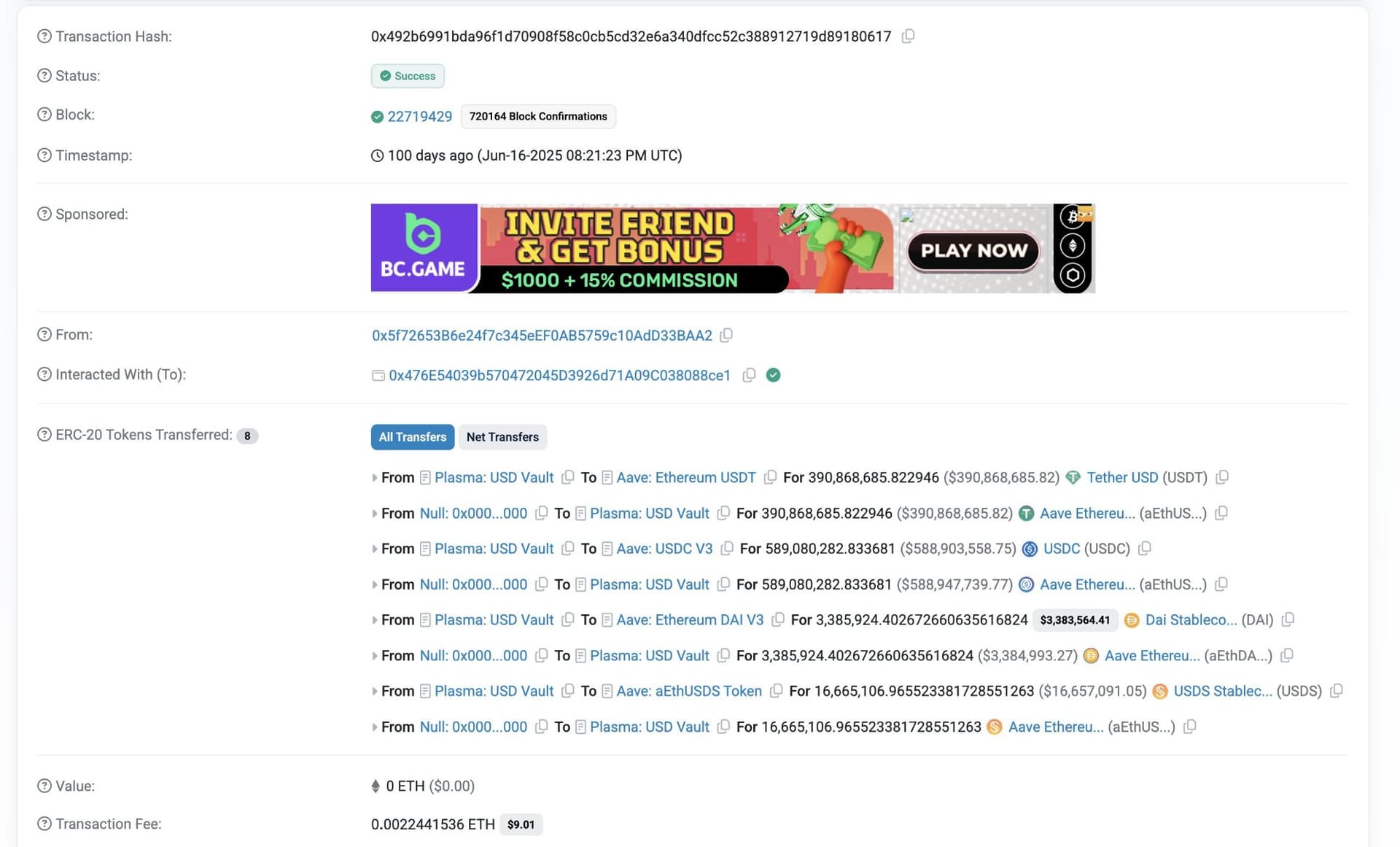
| Jun 16, 2025 | Veda Labs moves $1B of vault deposits to Aave and Sky |
| Jul 15, 2025 | Testnet live |
| Jul 17, 2025 | XPL public sale live on Echo |
| Jul 28, 2025 | Public sale ends |
| Aug 11, 2025 | Pendle partnership |
| Aug 19, 2025 | Fluid partnership |
| Aug 20, 2025 | Binance Earn partnership |
| Aug 26, 2025 | Wildcat Labs partnership |
| Aug 28, 2025 | USDai partnership |
| Aug 29, 2025 | EtherFi partnership ($500M TVL) |
| Sep 15, 2025 | Maple partnership + pre-deposit vault |
| Sep 16, 2025 | syrupUSDT vault fills in under 1 minute |
| Sep 22, 2025 | Plasma One introduced |
| Sep 22, 2025 | Edge Capital announced as Maple vault curator on Midas |
| Sep 23, 2025 | USDai pre-deposit goes live |
| Sep 24, 2025 | LayerZero/Stargate partnership |
| Sep 25, 2025 | Mainnet Beta live |
What Is Plasma?
Plasma is a layer 1 blockchain built for global stablecoin payments. It is secured by PlasmaBFT, a high-performance implementation of Fast HotStuff written in Rust. PlasmaBFT combines the safety of Byzantine Fault Tolerant (BFT) consensus with low-latency finality, enabling the throughput and deterministic guarantees required for stablecoin-scale applications. Reth handles state transition, transaction execution, and EVM logic — giving Plasma full EVM compatibility without modification.
PlasmaBFT can propose and finalize blocks faster than slot-based finality systems, enabling parallel processing of consensus steps with reduced latency and increased throughput. Plasma's native Bitcoin bridge, built on this foundation, offers a secure way for users to move BTC into the EVM environment — safeguarded by a network of verifiers rather than custodial wrappers or synthetic assets.
XPL Tokenomics
XPL is Plasma's native token used for transaction fees and network security, similar to ETH on Ethereum or SOL on Solana. XPL secures Plasma through Proof-of-Stake consensus and aligns long-term incentives as stablecoin adoption scales. Validators can stake XPL from day one. Plasma uses reward slashing (not stake slashing) — validators who misbehave lose rewards, not capital. Staked delegation enables XPL holders to delegate and earn rewards without running infrastructure.
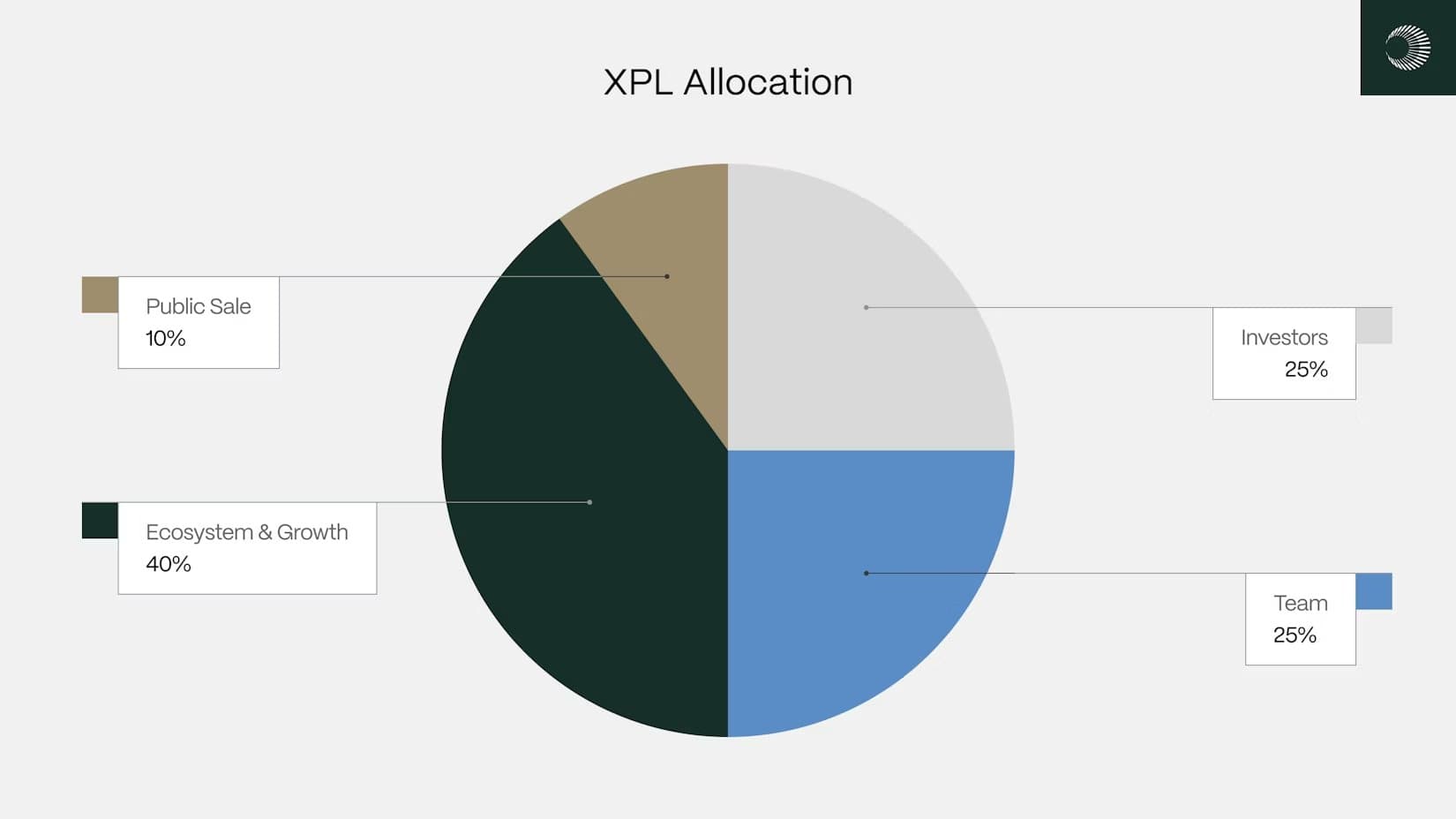
XPL's initial supply at mainnet beta is 10B, distributed as follows:
| Allocation | Share | Amount | Unlock |
|---|---|---|---|
| Public Sale | 10% | 1,000,000,000 XPL | Fully unlocked at launch (US purchasers: 12-month lockup until Jul 28, 2026) |
| Ecosystem & Growth | 40% | 4,000,000,000 XPL | 8% unlocked at launch; remaining 32% monthly pro-rata over 3 years |
| Team | 25% | 2,500,000,000 XPL | 1-year cliff, then monthly pro-rata over 2 years (fully unlocked in 3 years) |
| Investors | 25% | 2,500,000,000 XPL | Same schedule as team allocation |
Securing Capital and Liquidity
Plasma raised $24M in seed and Series A on February 13, 2025, led by Framework and Bitfinex, followed by strategic backing from Founders Fund. But instead of stopping at VC, Plasma leaned heavily on pre-deposit campaigns and DeFi integrations to bootstrap liquidity.
The Public Sale (Echo / Sonar)
On June 9, 2025, deposits for Plasma's public sale on Sonar (Echo's new public sale infrastructure) went live — Plasma was the first project to launch on it.
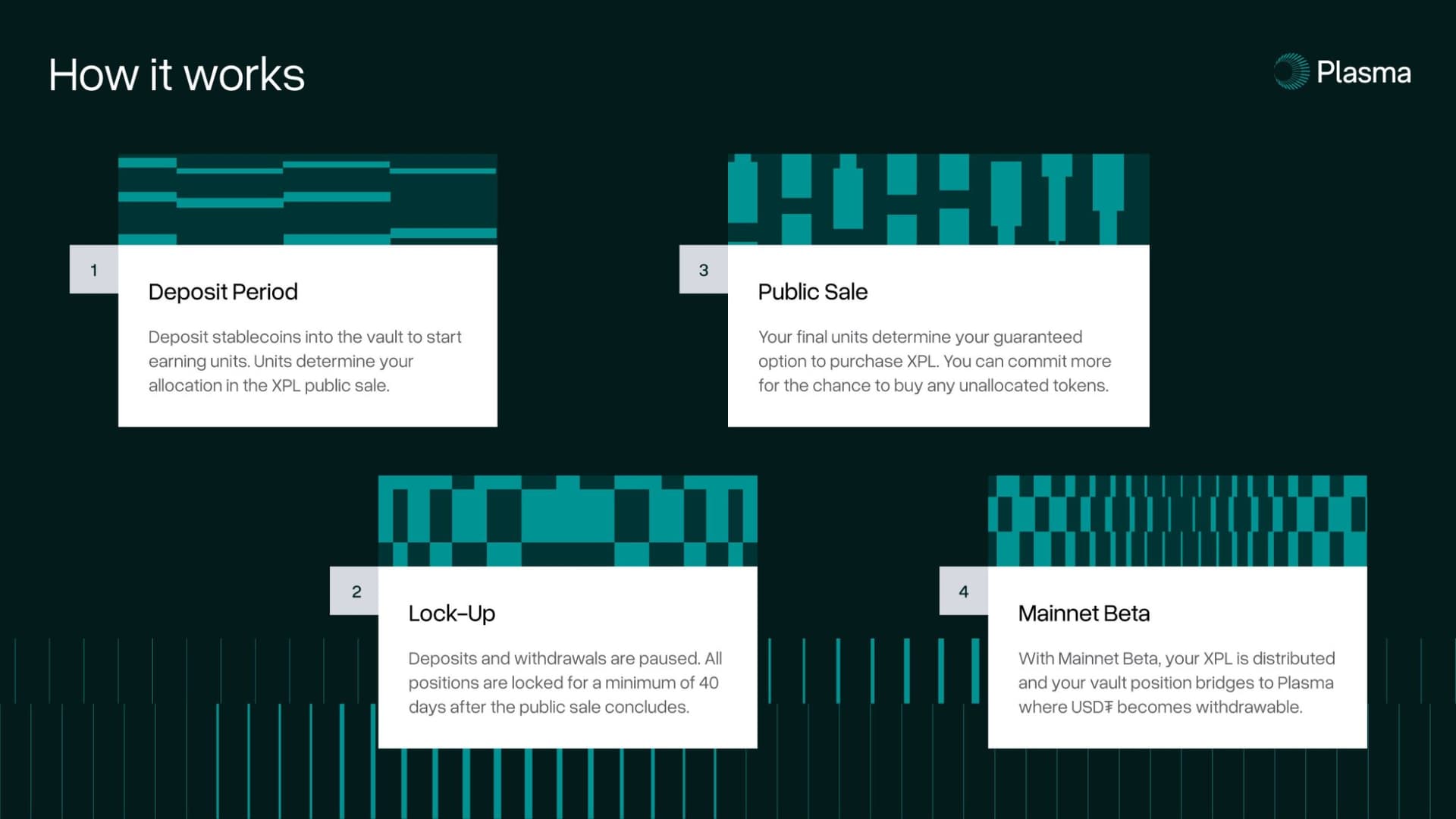
The mechanics:
- Deposit Phase. Participants deposited stablecoins (USDT, USDC, USDS, DAI) into the Plasma vault on Ethereum mainnet to earn "Units" — a time-weighted measure of allocation. Early deposits earned more units. Withdrawals during this phase reduced accumulated units.
- Lock-up Phase. After the 2-week deposit phase, a 40-day lock-up began. No deposits or withdrawals allowed as deposits were converted to USDT in preparation for bridging to Plasma Mainnet Beta.
- Public Sale Phase. Hosted on the Plasma website with KYC via Sonar. Guaranteed allocations based on Units, payable in accepted stablecoins, with the option to commit extra for pro-rata distribution of unclaimed tokens. 10% (1B XPL) sold at $500M FDV — matching the Founders Fund equity round. U.S. participants required accredited investor verification.
- Mainnet Phase. Vault positions bridged by Veda and deployed into Aave and Sky ahead of mainnet. XPL distributed based on units; deposits withdrawable on Plasma via USDT0 only.
The pre-deposit opened with an initial cap of $500M, which filled in under 5 minutes. The cap was raised to $1B later that week — also filled within 30 minutes. On June 16, 2025, Veda Labs bridged $1B of Plasma vault deposits to Aave and Sky.
The sale ran July 17–28, 2025. Roughly 3,000 wallets participated with a median deposit of ~$12K.
Binance Earn
Announced August 20, 2025 — the first fully onchain USDT yield product accessible directly through the Binance App. Deposits were routed transparently and onchain into Plasma's audited vaults. Users interacted solely with Binance's interface while their capital was deployed into Plasma.
On top of USDT rewards, 1% (100M XPL) of total supply was dedicated as incentives. The deposit opened with a $250M cap, filled within an hour. Due to demand, the cap was raised to $1B with a $50K per-user cap to prevent whale domination. Even so, the $1B cap filled quickly.
Post-TGE, the locked product remained available via Aave lending rails with up to 7% APR, settling transparently on Plasma. This partnership gave Plasma immediate scale, retail reach, and a mechanism to migrate billions of stablecoins onchain.
USDai Partnership
Announced August 28, 2025. USDai increased its platform deposit cap on September 23 to $500M, with $250M exclusively for Plasma at mainnet beta launch. The pre-deposit accepted USDC on Ethereum mainnet, with USDai distributed to participants' Plasma EVM addresses at launch. Despite technical issues with Vercel on pre-deposit day, the cap filled within hours.
The pre-deposit vault was the only way to mint USDai into Plasma. Once live, Allo game points and XPL for DeFi activity flowed to USDai on Plasma. Users could bridge USDai between Plasma and Arbitrum from day one via LayerZero.
Maple / syrupUSDT
On September 15, 2025, Maple and Plasma announced the integration of syrupUSDT with a $200M pre-deposit vault. The vault accepted USDT, USDC, or syrupUSDT with a $125K minimum commitment and a 2-month lockup. Participants received:
- XPL incentives for early network exposure
- Lending yield from Maple's credit engine ($9B+ in loans originated)
- Drip boosts and early yield opportunities at mainnet launch
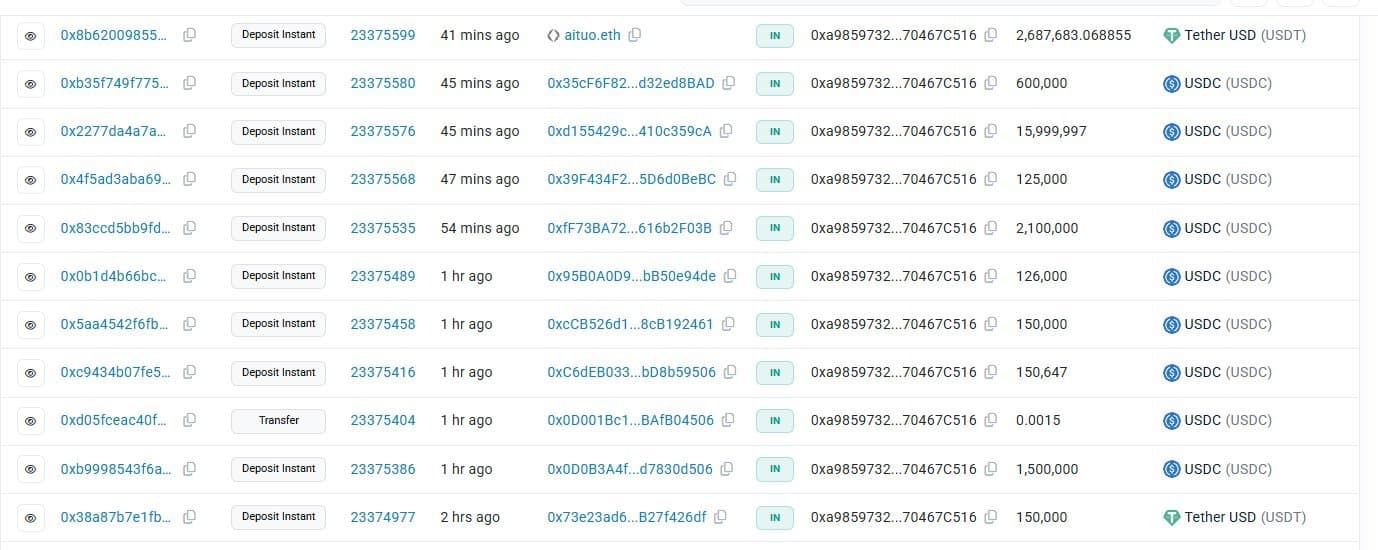
The syrupUSDT vault filled in under a minute. There were community concerns about deposits arriving before the official open — suggesting a leaked contract address — but it was not a major issue. Edge Capital was subsequently announced as curator of the vault on Midas, and funds were routed into Plasma-aligned strategies via Aave, Sky, and other partners by Veda Labs.
The Consumer Layer: Plasma One
On September 22, 2025, Plasma introduced Plasma One — a neobank-style product operating entirely on stablecoins. The core value proposition:
- Spend while you earn. Users pay directly from their stablecoin balance while collecting 10%+ yields.
- Real-world spending. Up to 4% cashback on physical and virtual cards across 150+ countries and 150M+ merchants.
- Zero-fee USDT payments. Instant, borderless transfers for individuals and businesses.
- Fast onboarding. Sign up, verify, and receive a virtual card in minutes.
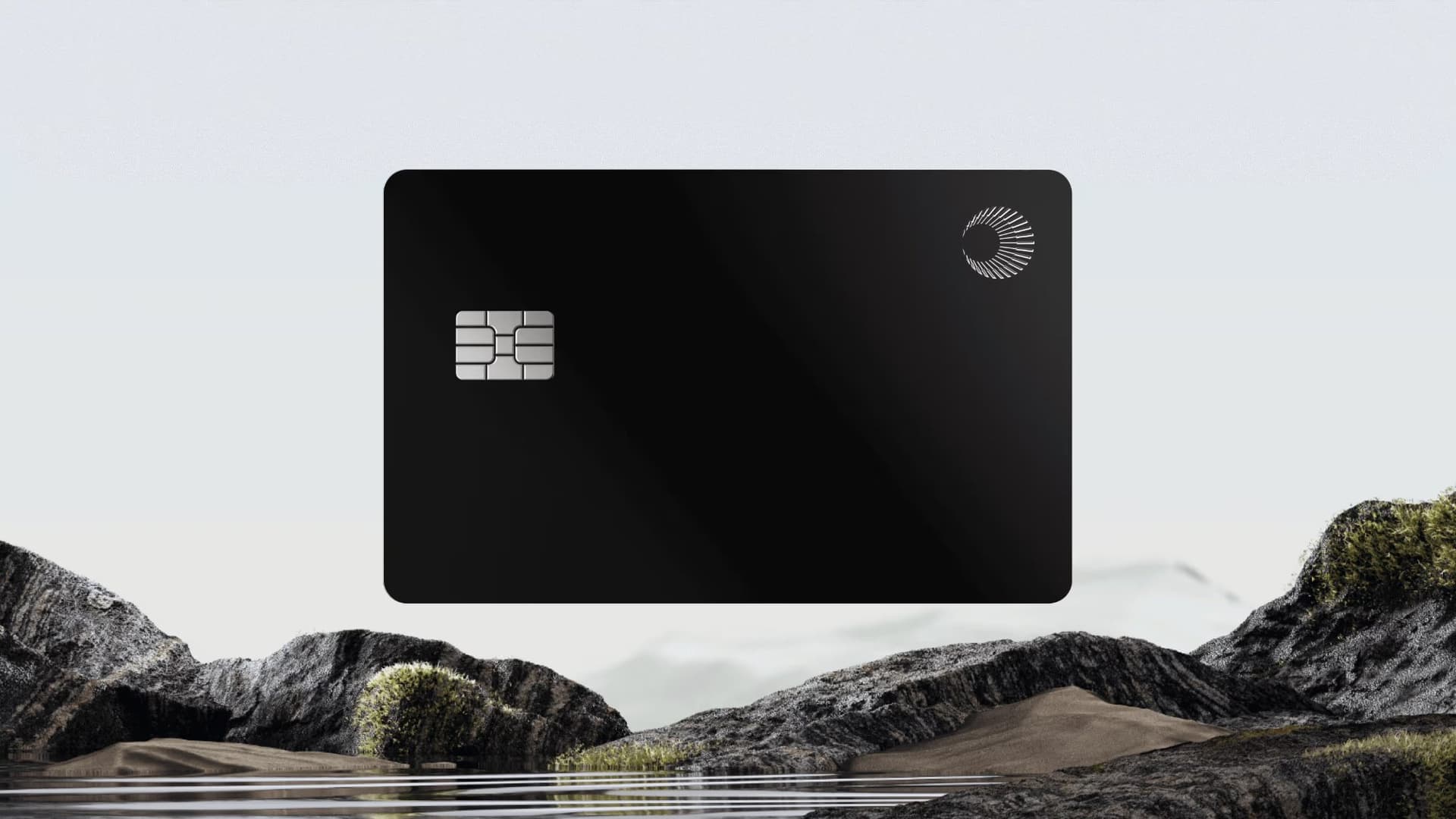
Plasma One serves as both a consumer product and a proof-of-concept for how stablecoin infrastructure can support real-world financial use cases at scale.
Mainnet Results
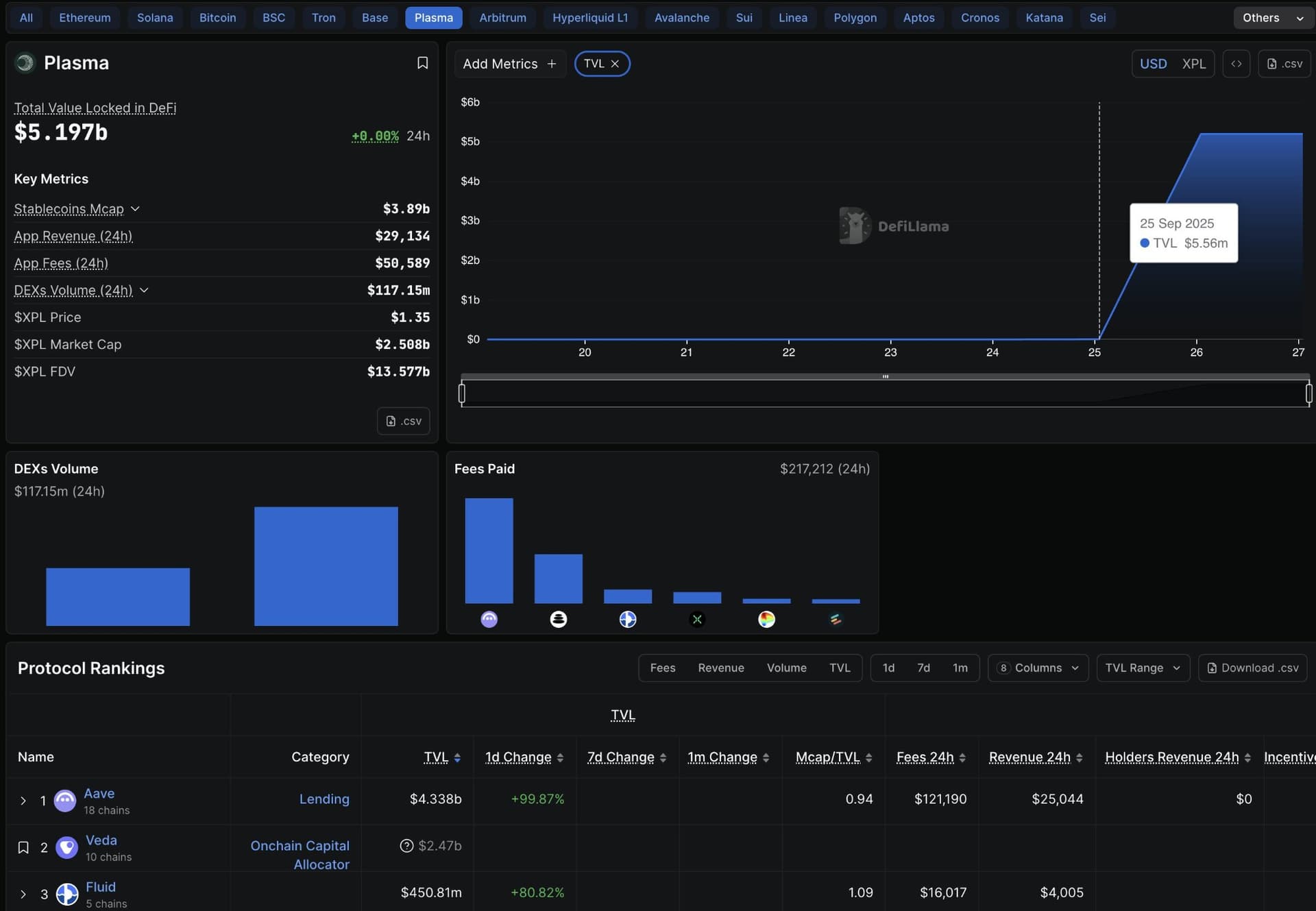
Upon mainnet beta launch, the numbers spoke for themselves:
| Metric | Result |
|---|---|
| TVL (24 hours) | $5.2B — top 7 chain by TVL, behind Base |
| TVL composition | 90% on Aave |
| XPL launch FDV | $13B ($1.30/XPL, peaked at $1.40) |
| Presale airdrop | 9,304 XPL (~$12K) to every KYC'd depositor, even $1 |
| Plasma One signups | 65,000 organic email signups |
| Echo FCFS sale ROI | Early investors up 220x+ |
| Presale allocation (10%) | Worth ~$1.3B at time of writing |
| Binance Earn allocation (1%) | Worth ~$130M at time of writing |
| LayerZero OFT volume | $3B+ moved, $1.8B via Stargate UI on day one |
| Aave TVL (day one) | $4B+ |
Competitive Landscape
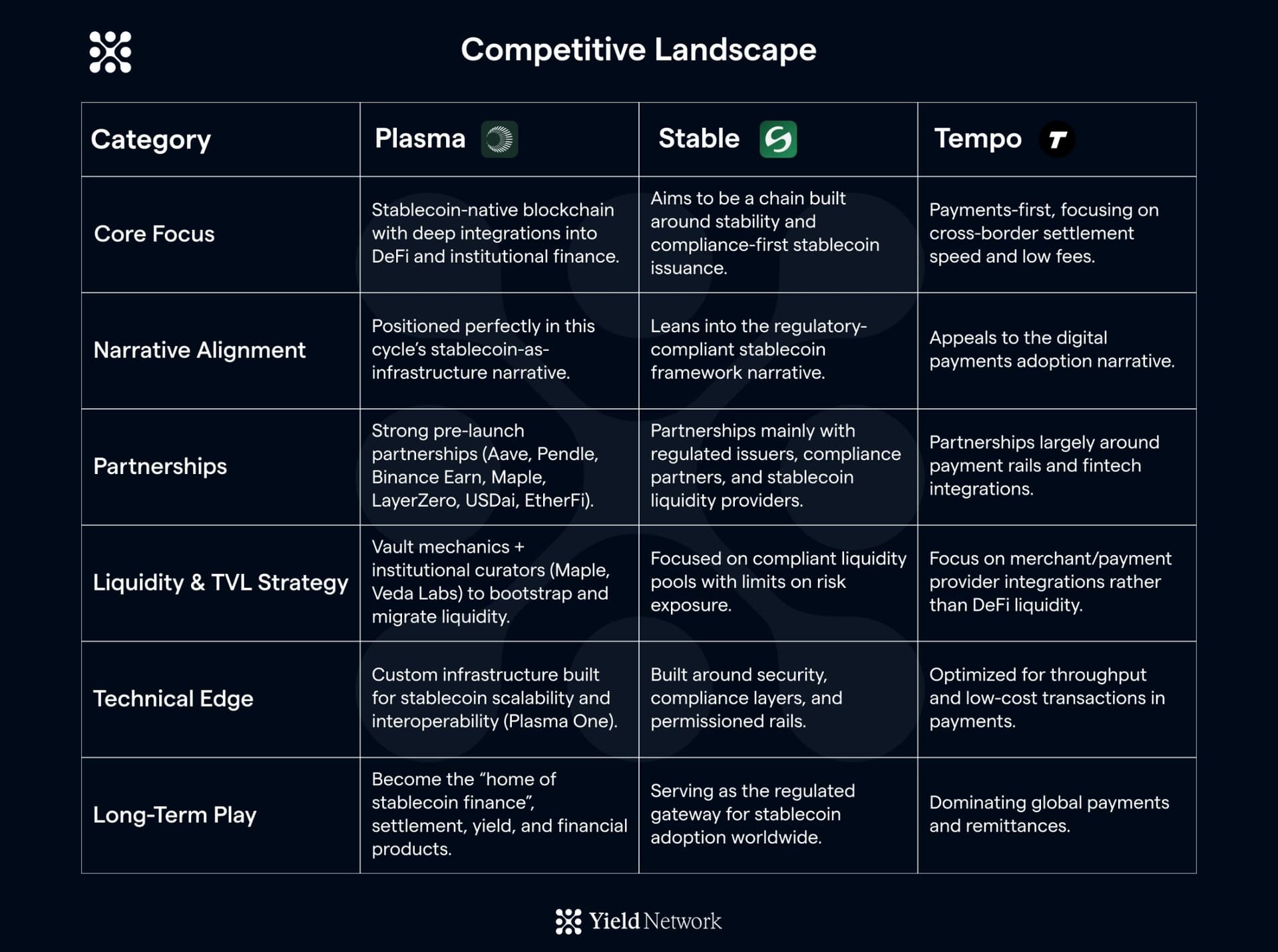
In the emerging landscape of stablecoin-native chains, three projects are pursuing distinct strategies:
- Plasma — Leading on DeFi depth. Deep USDT markets, vaults, and liquidity partnerships give it strong financial infrastructure from day one.
- Tempo — Focused on stablecoin payments and settlement, positioning as rails for fast, borderless transactions.
- Stable — Leaning into compliance and regulation, targeting institutional adoption with a trusted framework for regulated stablecoin usage.
The stablecoin chain narrative is diversifying — Plasma leads on DeFi depth, Tempo on payments, and Stable on institutional trust.
Takeaways
Plasma's trajectory highlights several key strengths:
- Narrative alignment. Plasma positioned itself squarely within the dominant stablecoin narrative of this cycle, ensuring strong market relevance.
- Multi-channel liquidity strategy. Pre-launch partnerships spanned retail (Binance Earn), community (USDai, public sale), and institutional (Maple, Edge Capital) channels — diversifying liquidity sources and building credibility across user segments.
- Execution discipline. The TGE combined clear mechanics with a distribution model that was both generous and inclusive — 9,304 XPL to anyone who deposited even $1.
Together, these elements suggest Plasma has laid serious groundwork and may serve as a reference point for how stablecoin-focused chains approach capital formation going forward.
This report was prepared by Yield Network.
About Yield Network
Yield Network is the operating layer for onchain capital formation. We orchestrate chain-level liquidity campaigns — from pre-deposit vaults to post-launch retention — coordinating LPs, curators, and incentives to maximize capital efficiency.